


How Tesla's Autopilot Works ?
How Tesla's Autopilot works: cameras, artificial intelligence, 3D vision, prediction, and decision-making.
ADVANCED TECHNOLOGIES
Lucas GRANDIER
5/20/20266 min read


For several years, Tesla has been developing a driver-assistance system called Autopilot. This system is not fully autonomous driving, but an advanced assistance feature that allows the vehicle to handle certain tasks such as lane keeping, speed adjustment, and automatic braking.
The system operates on a central principle: the car must be able to perceive its environment, understand it, and react in real time using artificial intelligence. This approach combines cameras, onboard computing, and neural networks trained on millions of kilometers of real-world driving data.
Introduction
A complete 360-degree view
Tesla’s Autopilot system is based above all on a fundamental principle: the car must “see” its surroundings in order to understand them. This perception is provided by a set of cameras strategically placed around the vehicle. They constitute the system’s first layer of analysis, the one that transforms the real-world road into data that can be processed by artificial intelligence.
Unlike a simple surveillance camera, these sensors do not merely record images. They continuously capture a high-frequency video stream that is immediately sent to the onboard computer. Each image becomes a source of information that the system must analyze in a matter of milliseconds. The goal is not to replicate human vision, but to create an accurate and actionable digital representation of the road scene.
These cameras are positioned to provide nearly complete coverage around the vehicle. Some are oriented forward to monitor the road over long distances and anticipate faster vehicles or changes in traffic. Others are placed on the sides to analyze intersections, passing maneuvers, and blind spots. Finally, rear-view cameras allow for monitoring traffic behind the car, particularly during lane changes or maneuvers.
To transform a continuous video feed into instantaneous driving decisions, Tesla’s Autopilot relies on phenomenal computing power. This coordinating role is handled by the FSD Computer (Full Self-Driving Computer), a custom-built onboard computer considered the true electronic brain of the brand’s vehicles.

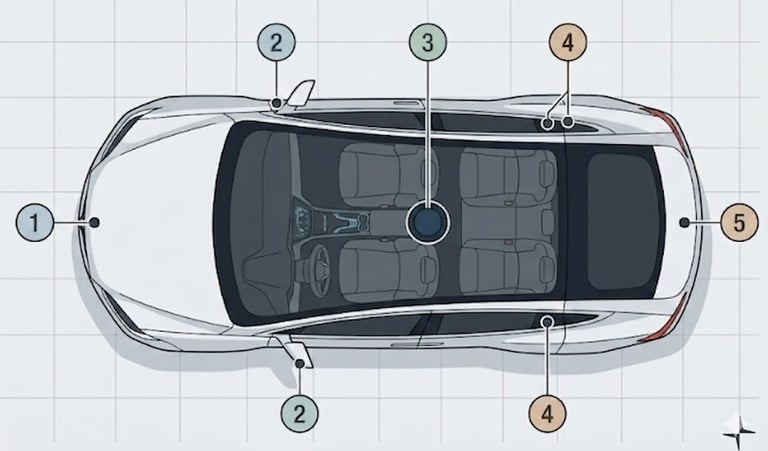
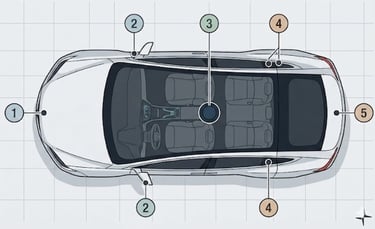
The vehicle is equipped with seven strategically placed cameras : one mounted above the front grille (1), one on each front fender (2), two on the windshield above the rearview mirror (3), one in each door pillar (4), and one above the rear license plate (5).
Analysis in milliseconds for maximum security
On the road, reaction time is the key factor in road safety. The FSD Computer (particularly in its latest versions, such as Hardware 4 / HW4) is equipped with redundant AI chips capable of performing up to tens of trillions of operations per second.
Did you know ? Every second, the system analyzes dozens of images per camera. The time between capturing a visual event (such as the vehicle ahead braking suddenly) and the mechanical decision (to brake or swerve) takes only a few milliseconds, a reaction time significantly shorter than that of a human driver.
This ultra-fast processing enables the system to anticipate unpredictable behaviors, plan the ideal trajectory, and ensure a smooth, natural, and safe autonomous driving experience.
Ultra-fast data processing using neural networks
As soon as the peripheral cameras capture their surroundings, high-frequency images are streamed continuously to the FSD Computer. Unlike traditional systems based on hard-coded programming rules, Tesla’s computer uses deep neural networks (deep learning).
In a fraction of a second, the processor simultaneously performs three critical operations:
Semantic segmentation : This is an image processing technique that allows for the instant identification and segmentation of every element in the environment (vehicles, pedestrians, road markings, traffic lights, and signs).
Depth estimation : Using a geometric analysis of perspective (vector stereoscopy), the computer calculates the exact distance to each obstacle, effectively replacing physical sensors such as radar or LiDAR.
3D spatial reconstruction : The processor merges images from all cameras to create the Occupancy Network, a three-dimensional digital model that continuously maps the entire space surrounding the vehicle.


The FSD Computer: Artificial Intelligence at the Heart of Tesla's Autopilot
Cameras: The Foundation of Vehicle Perception
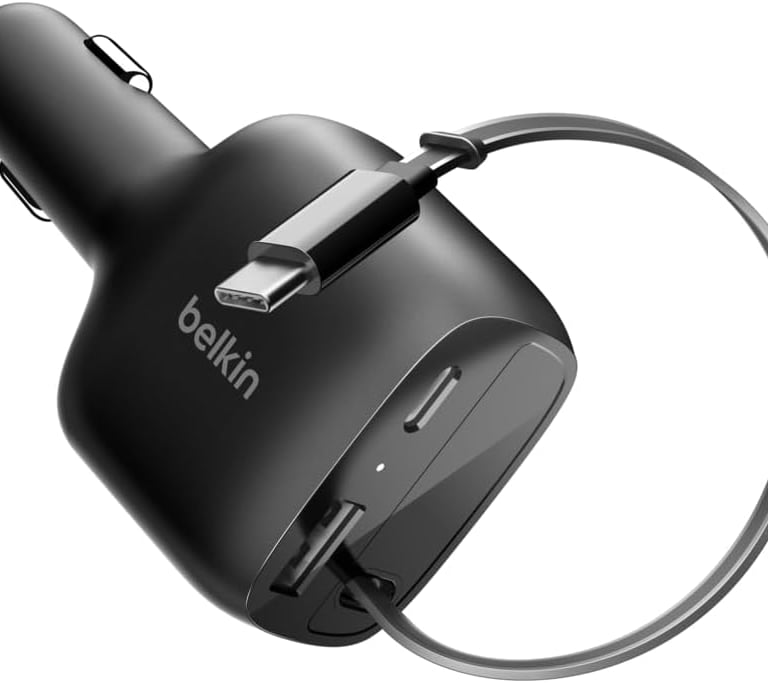
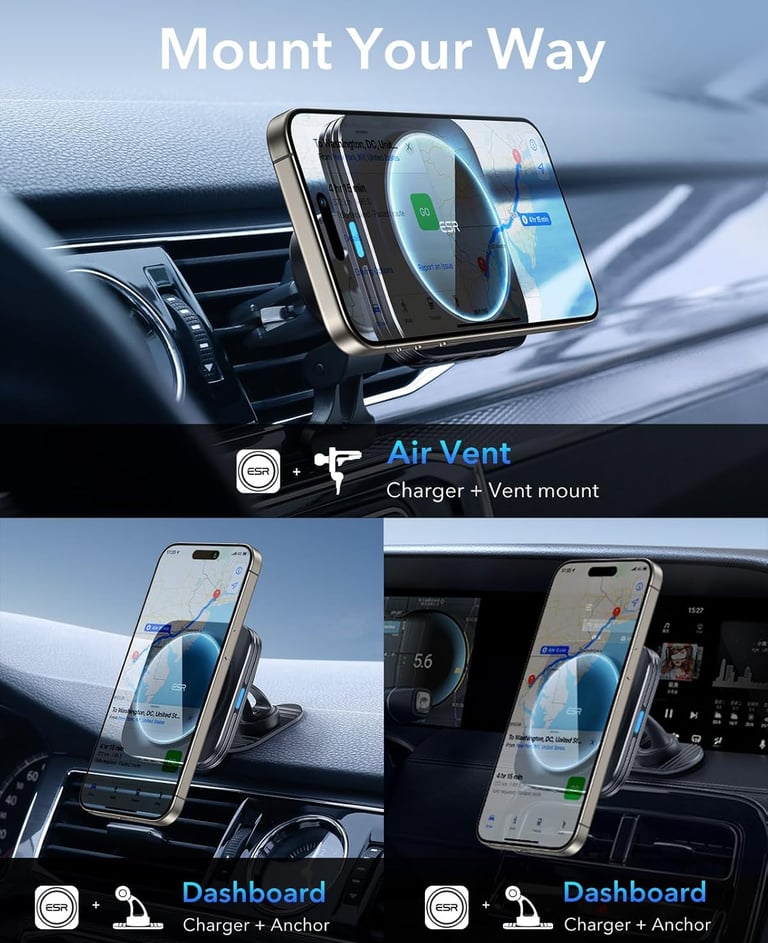
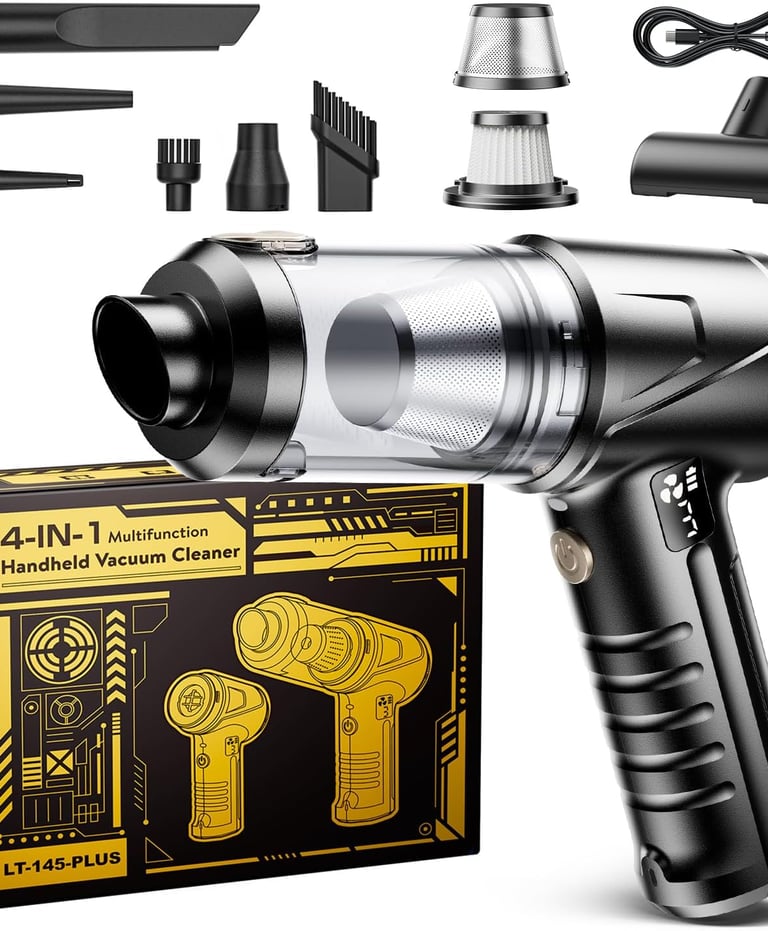
🔧 Car gadgets every driver should have
Discover a selection of practical and high-tech accessories to enhance your comfort and driving experience:
From Perception to Action: How Tesla Plans Its Trajectories
The “End-to-End” Neural Network: Mimicking Human Behavior
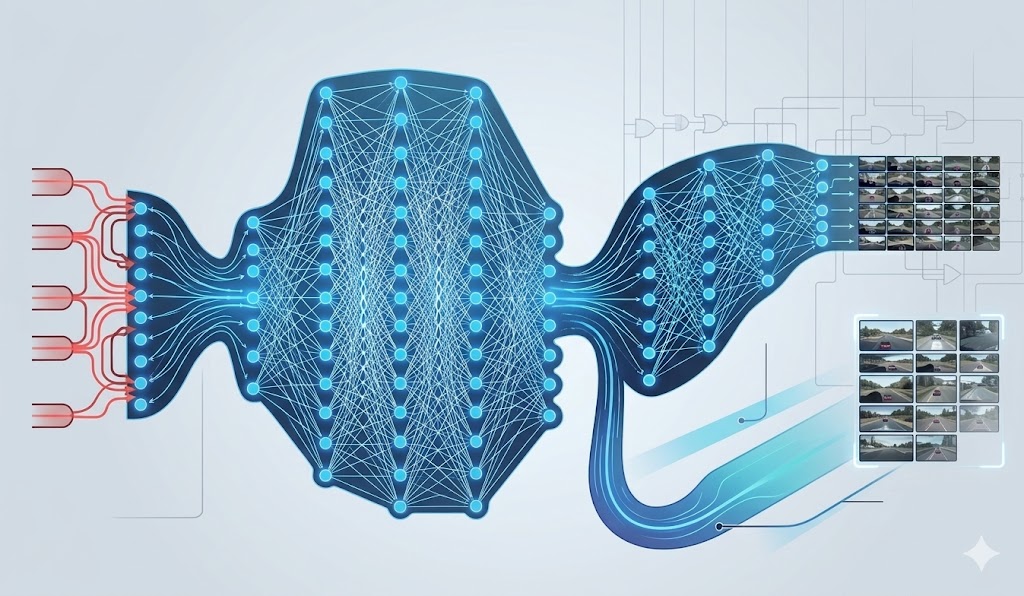
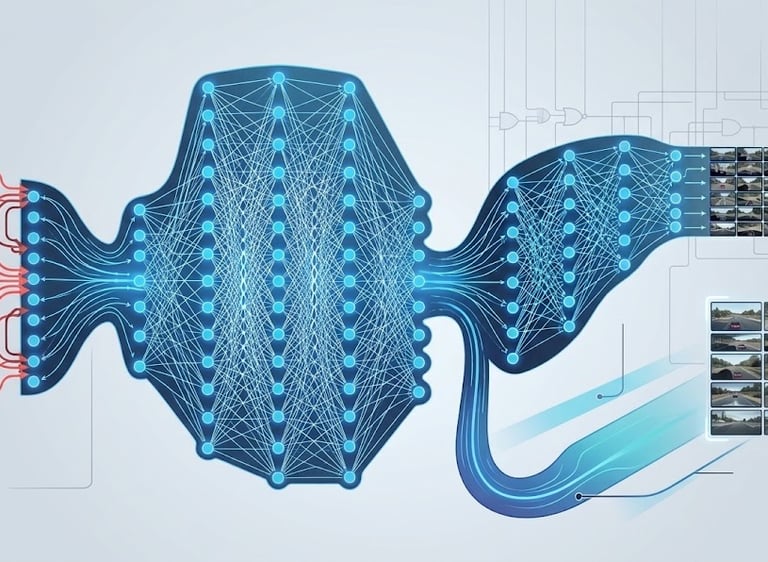
Once the FSD Computer has reconstructed the environment in 3D, it must decide what action to take. Earlier versions of Autopilot used thousands of lines of traditional computer code to dictate strict rules (e.g., “if a pedestrian is crossing, apply the brakes”).
Today, Tesla uses a revolutionary approach called end-to-end neural networks. The system has been trained on millions of videos of exemplary human drivers. Artificial intelligence no longer applies hand-coded rules: it determines steering, acceleration, and braking by mimicking the reflexes of an excellent driver.
Adaptive decision-making in complex situations
This algorithmic flexibility allows the car to handle unpredictable and unanticipated driving scenarios :
Merging into congested roundabouts : A detailed analysis of timing and the behavior of other road users.
Dynamic obstacle avoidance : Smoothly navigating around a moving construction site or an animal without sudden braking.
Negotiating Shared Spaces : Smooth Coexistence with Cyclists and Scooters in Urban Areas.
Tesla Vision: The Bold Choice of “100% Cameras”
Why remove radar and ultrasonic sensors?
It is one of the most talked-about technological decisions in the history of the modern automobile. Elon Musk gradually phased out front-facing radar and then the ultrasonic sensors in the bumpers to implement the Tesla Vision strategy.
Tesla's argument is based on biology: humans drive solely using their eyes (vision) and their brains (analysis). For the company, adding different sensors (such as radar or LiDAR) created a “data cacophony”. When the radar and camera disagreed about the presence of an obstacle, it caused malfunctions, notably the infamous phantom braking.

The Benefits of Tesla Vision for the General Public
By focusing all data processing on the optical feed from the 7 cameras, Tesla has optimized its system:
Absolute data consistency : A single source of truth for the FSD Computer.
Continuous improvement through the fleet : Every Tesla on the road helps train the overall AI by reporting visual perception errors.
Over-the-air (OTA) updates : The car’s sensing capabilities are constantly improving through simple software updates, without changing any physical parts of the car.
Thanks to this unique combination of strategically placed cameras and the raw power of the FSD Computer, Tesla is redefining active safety and paving the way toward full autonomy, transforming every trip into a safer, more consistent experience.


Conclusion: The Future of Autonomous Driving According to Tesla
By combining a network of seven high-definition cameras with the raw computing power of the FSD Computer, Tesla has developed a perception architecture that is unique in the world. The decision to go “Vision Only,” while technically challenging and bold, demonstrates that artificial intelligence and deep learning can rival human senses in anticipating road hazards.
While the automotive industry remains divided over the use of expensive sensors like LiDAR, Tesla proves that the key to the autonomous car lies in software optimization and real-time data processing. This technology continues to advance thanks to the millions of connected vehicles that feed the brand’s supercomputers daily.
As European and global regulations evolve to govern Level 3 and higher driver-assistance systems, the combination of Tesla’s cameras and processor positions the brand in pole position to eventually transform our passenger vehicles into true fleets of autonomous robotaxis.
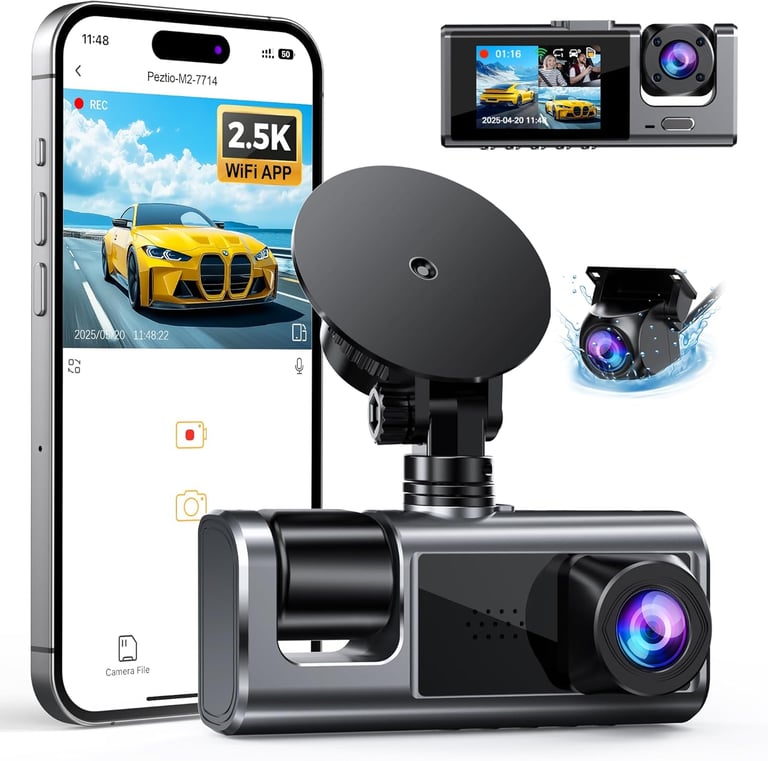
Discover the must-have accessories for your car :
🔎 Related articles :

Tech, simply.
Receive our new articles, tips and comparisons directly in your inbox.
©2026 The Tech BEHIND. All rights reserved
The Tech Behind participates in various affiliate programs. Some links on this site may generate a commission.