


How does a rocket work? The Simple Guide to Space Launches
How does a rocket take off? Engines, stages, action reaction and orbiting: discover the secrets of space launches in our complete guide.
ADVANCED TECHNOLOGIES
Lucas GRANDIER
5/31/20266 min read


Every space launch is a real technological feat. In the space of a few minutes, a launcher weighing several hundred tons tears itself away from the Earth's gravity, crosses the atmosphere and reaches the staggering speed of 28,000 km/h to place itself in orbit.
But how can such a mass take off? How do its engines produce such gigantic thrust, and why does the rocket split into several pieces in mid-flight?
Discover the secrets of space propulsion through this comprehensive guide, designed to explain this technology to you in simple words, while using the real vocabulary of aerospace engineers.
Introduction
Newton's third law
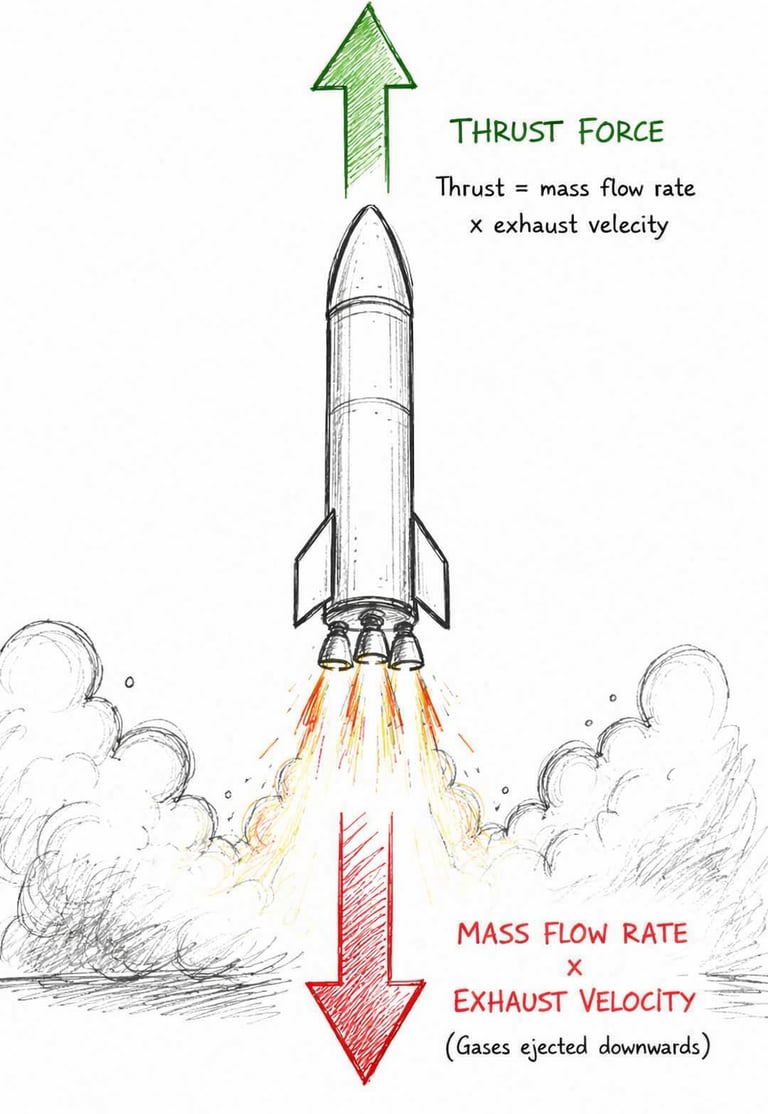
The movement of a launcher is based on the principle of action-reaction. When an engine expels gases at very high speed downwards (the action), a force of the same intensity pushes the rocket upwards (the reaction). This is called pushing.
In space physics, this thrust is expressed by the following formula :
The Thrust Equation
The physical principle: propulsion by action-reaction
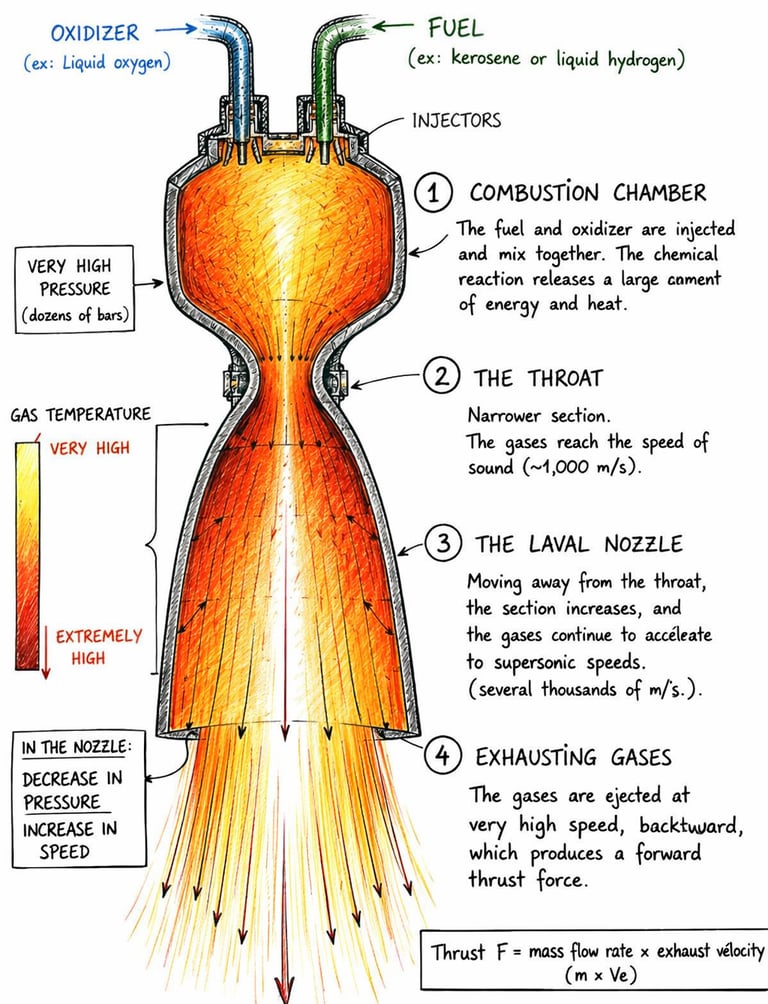
F = Qm x Ve
To put it simply:
F is the thrust force.
Qm (the mass flow) represents the amount of gas expelled each second.
Ve (the ejection velocity) is the rate at which these gases are expelled.
Conclusion: the faster the rocket ejects material and in large quantities, the faster it takes off.
The anatomy of a launcher: the key components
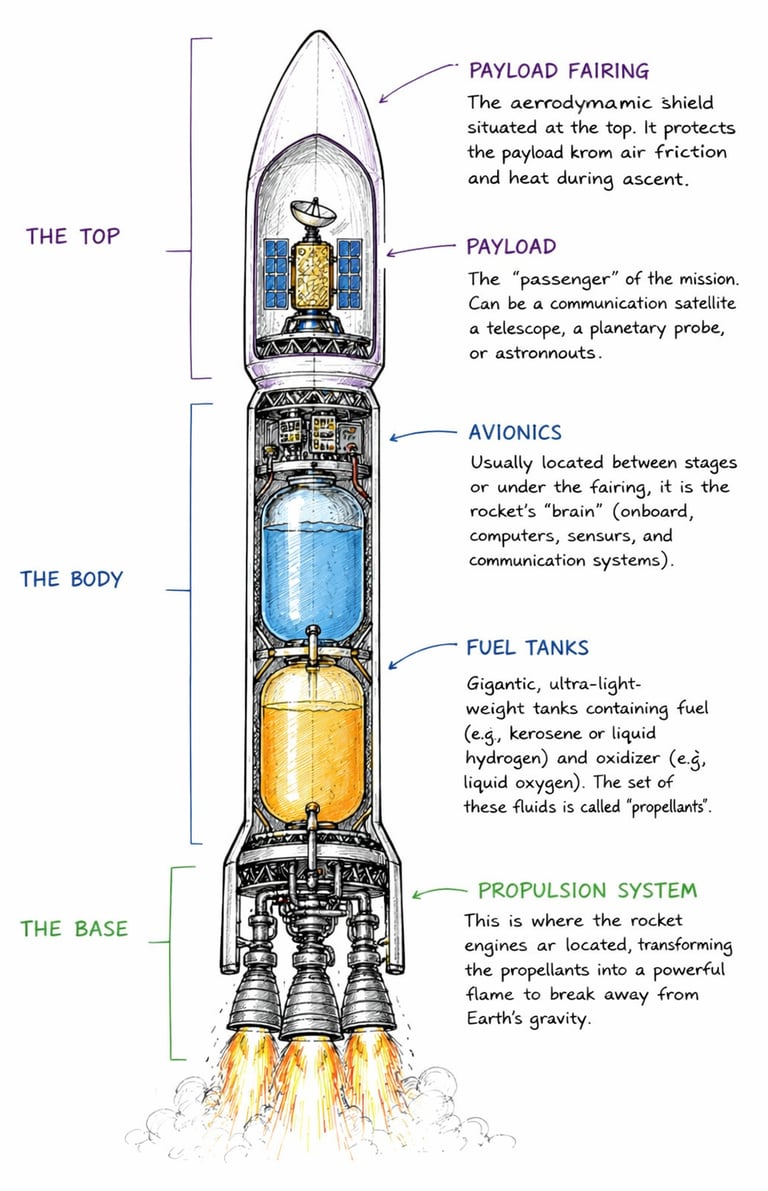
The top: the payload and its protection
The headdress: The aerodynamic fairing located at the very top. It protects the cargo from air friction and heat during climbing.
Payload: The "passenger" of the mission. It can be a telecommunications satellite, a telescope, a planetary probe or astronauts.
The body: tanks and avionics
Propellant tanks: Giant and ultra-light tanks containing fuel (e.g. kerosene or liquid hydrogen) and oxidizer (e.g. liquid oxygen). All of these fluids are called "propellants".
Avionics: Generally located between the floors or under the fairing, it is the "brain" of the rocket (on-board computers, sensors and communication systems).
The Basics: The Propulsion System
This is where the rocket engines are located, responsible for transforming the propellants into a powerful flame to tear the whole thing away from the Earth's gravity.
🚀 Want to go further?
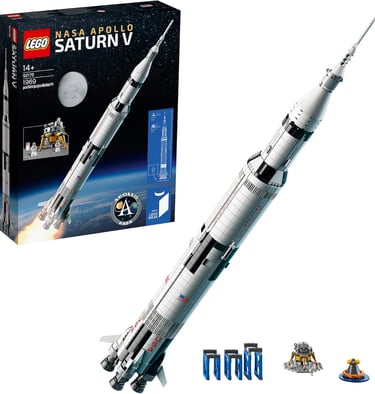
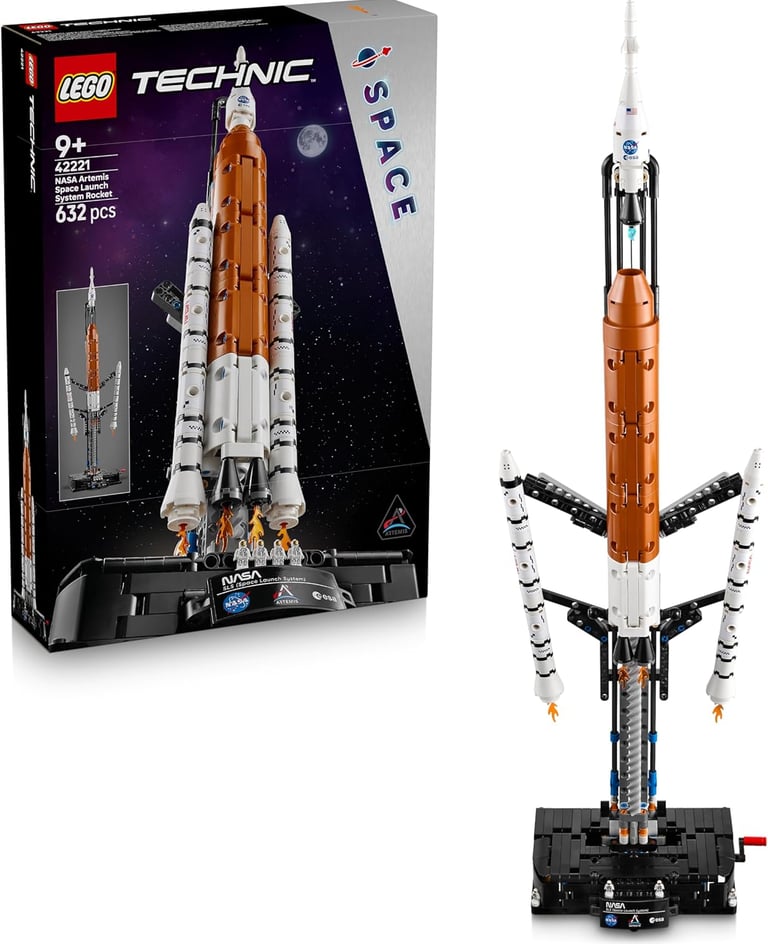
If you're passionate about rockets, here is a selection of products to build your own launcher or to discover the history of the conquest of space:
At the heart of power: how does the rocket engine work?
1. Turbopump power
Fuel and oxidizer are sucked into the tanks by high-powered pumps called turbopumps. They rotate at tens of thousands of revolutions per minute to gobble up tons of fluids every second.
2. The explosion in the combustion chamber
The Weight Paradox: The Staging Principle
A rocket's worst enemy is its own weight. To reach space, a launcher must be composed of about 85% or 90% propellant.
The problem of dead weight
As the rocket climbs and burns its fuel, its huge metal tanks are empty. They very quickly become a useless "dead weight" that must continue to be dragged against gravity.
Flying straight? Thrust vector guidance and control
Contrary to popular belief, a rocket does not fly straight upwards. To enter orbit, it must tilt gradually (a maneuver called the gravity turn) to gain horizontal speed.
This mixture is injected under very high pressure into a confined chamber. It ignites instantly, creating burning gases at over 3,000°C.
The solution: separate in mid-flight
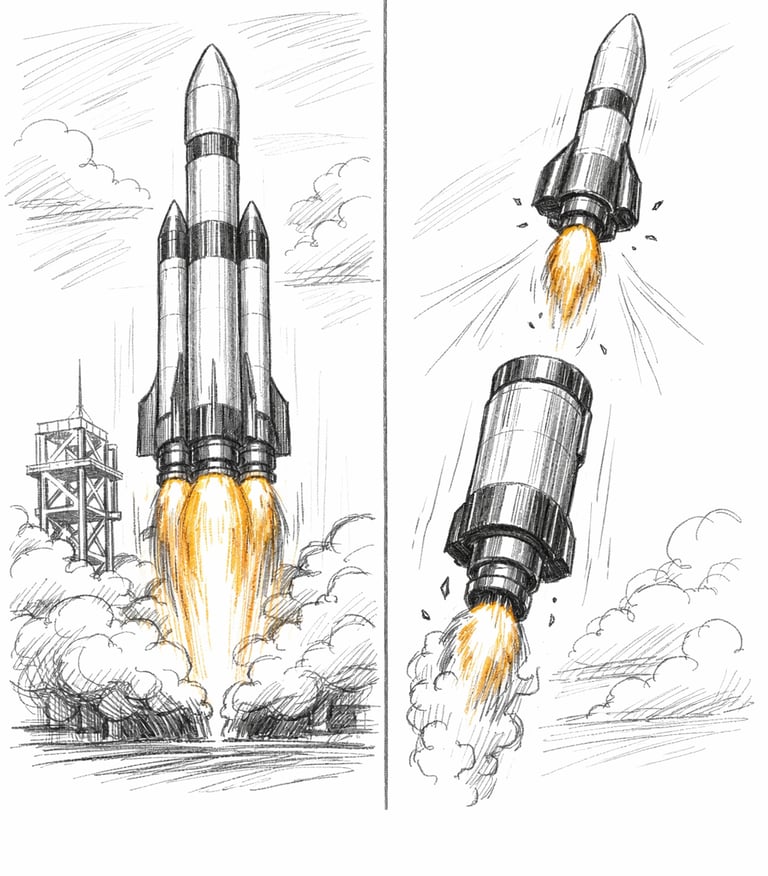
Engineers use the principle of staging. As soon as the large tank at the bottom (the first stage) is empty, explosive bolts detach it and it falls. Suddenly lightened by several dozen tons of metal, the rocket ignites the engine of its second stage and continues its journey with formidable efficiency!
3. Acceleration by the Laval nozzle
These gases try to escape. They pass through a bottleneck (the neck) and then extend into the large engine bell (the divergent). This special geometric shape, the Laval nozzle, transforms heat and pressure into a prodigious speed. The gases are spat out at more than 3 km/s.
The inner ear of the rocket: the IMU
As the rocket climbs and burns its fuel, its huge metal tanks are empty. They very quickly become a useless "dead weight" that must continue to be dragged against gravity.
Leading the Flame: TVC
If the rocket deviates, the computer uses TVC (Thrust Vector Control). It slightly rotates the engine on small gimbals (gimbaling). The flame vector changes direction, which instantly straightens the rocket, just like the rudder of a ship.
The major nominal phases of a flight
A space launch is a choreography set to the millisecond, which takes place in several acts.
From the Earth to the upper atmosphere
Liftoff: The engines ignite at full power, the rocket tears itself off the ground and begins its gravity turn.
Max Q (Maximum Dynamic Pressure): This is the critical moment when the rocket's aerodynamic structure undergoes the most shaking due to its extreme speed combined with the surrounding wall of air.
At the gates of space
MECO (Main Engine Cut-Off) and Separation: The engine of the first stage shuts down and the empty stage is jettisoned.
Cuff release: Once out of the thickest of the atmosphere, the rocket ejects its protective fairing to save weight.
From the Earth to the upper atmosphere
SECO (Second Engine Cut-Off): The second engine shuts down once the satellite speed is reached (about 7.8 km/s for low orbit).
Deployment: The payload is safely released into space.
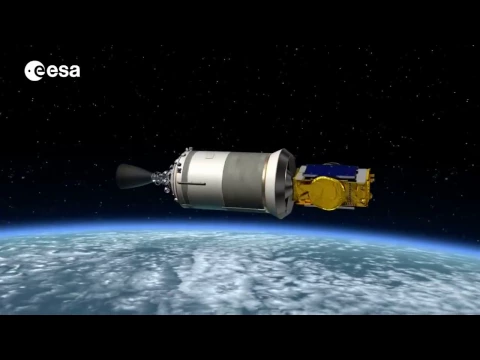
The Challenges of Space: Surviving Hell
The design of a rocket must respond to environmental constraints of unprecedented hostility.
Total absence of air in space: the importance of the oxidizer
Aircraft engines are called "aerobic": they draw the oxygen necessary for their operation directly from the ambient air. A rocket, on the other hand, evolving in the vacuum of space, is deprived of this contribution. It is therefore obliged to store its own oxidizer (such as liquid oxygen) to ensure the combustion of its propellants, even in the absence of an atmosphere.
Withstand thermal and mechanical stresses
The temperature shock: Cryogenic fluids freeze the inside of tanks at -253°C (for liquid hydrogen), while flue gases exceed 3,000°C a few meters away.
The acoustic and vibratory environment: During take-off, the sound pressure generated by the engines is so intense that the acoustic waves, by reflecting off the ground, could seriously damage the structure of the launcher. To mitigate this risk, the launch pad is equipped with a massive water deluge system responsible for absorbing and dissipating the energy of the shock wave.
The load factor: Under the effect of continuous propulsion, the launcher is subjected to significant mechanical stresses. At the end of the combustion phase, when the rocket has been considerably lightened of its propellants, the acceleration peaks. The structure and payload then take up a load factor of up to 4 to 5 g (i.e. four to five times the Earth's gravity).
Conclusion: The Future of Aerospace Engineering
Flying an orbital launcher is a small technological miracle. From mastering a turbopump-powered infernal fire to ultra-precise inertial guidance, each launch represents the pinnacle of human know-how.
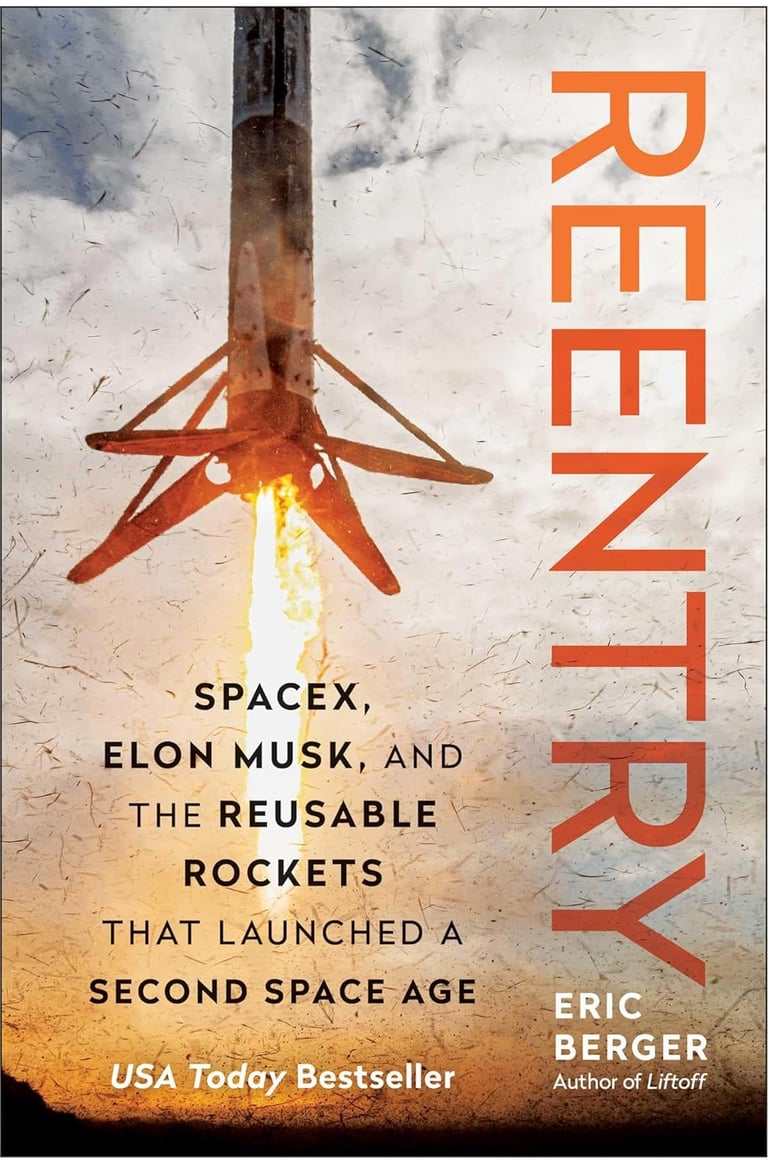
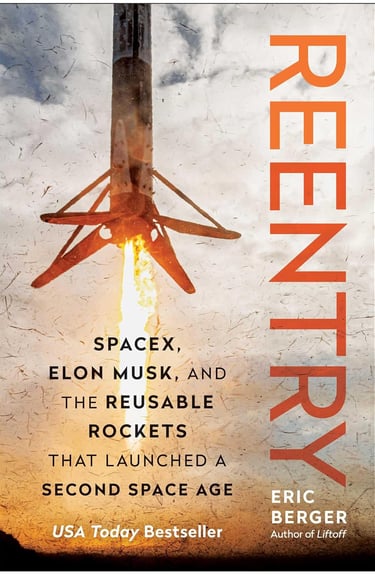
Today, space history is accelerating. Whereas in the past these rockets were thrown away after a single flight (the so-called "consumable" launchers), engineers are now able to land the first stages to make them reusable. By recovering these key pieces, the cost of access to space collapses, opening the doors to a new era: constellations of global satellites, the return to the Moon with the Artemis program, and soon, the first human missions to Mars.

🚀 Here is a list of products I recommend:
🔎 Related articles :

Tech, simply.
Receive our new articles, tips and comparisons directly in your inbox.
©2026 The Tech BEHIND. All rights reserved
The Tech Behind participates in various affiliate programs. Some links on this site may generate a commission.