


AI agents explained: definition, how they work, examples and limitations
A general public guide to AI agents: simple definition, step-by-step operation, differences with ChatGPT, examples of use and limitations (2026).
AI
Lucas GRANDIER
7/10/20267 min read


An AI agent is an autonomous software program that acts on behalf of a user to perform tasks of varying complexity. Unlike a traditional chatbot (like ChatGPT) that simply answers questions, an AI agent understands the overall context of a task and determines the necessary steps to achieve it. In practice, an AI agent can be given a high-level instruction (for example, "Schedule a meeting with Sophie next Monday" ). The agent will then gather the necessary information (calendar, contacts, availability), prepare and send invitations, without requiring individual instructions for each step. This ability to initiate actions goes far beyond that of a simple, responsive chatbot.
Definition: As IBM notes, "an AI agent is a software program capable of acting autonomously to understand, plan, and execute tasks ." In other words, an AI agent is more than a text generation interface: it uses language models ( LLMs ) as its "brain," but can also interact directly with applications, learn from its past actions, and require human approval when necessary.
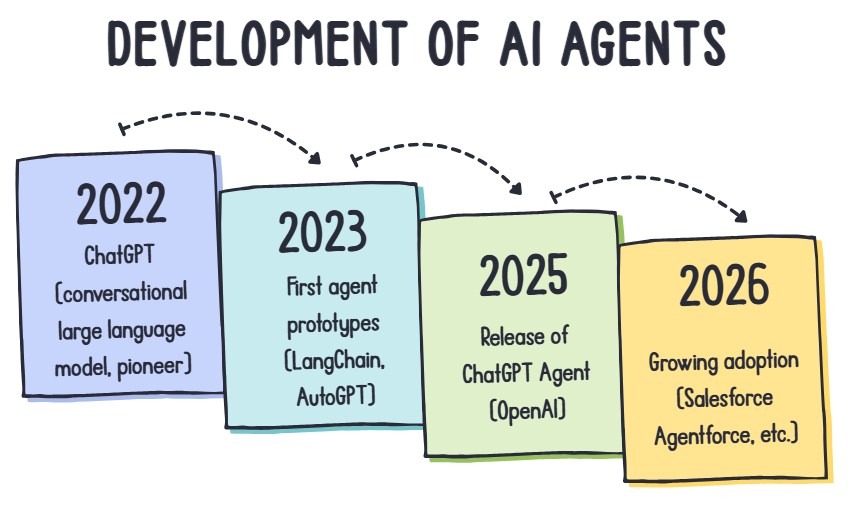
Why is there so much talk about AI agents in 2025-2026?
How does an AI agent work?
The media frenzy surrounding AI agents is recent, driven by advances in LLMs like GPT-4. According to IBM, 2025 is "the year of AI agents": major tech companies and numerous startups are experimenting with these systems. An Anthropic/Material report (2026) reveals that "8 out of 10 organizations believe that AI agents have already delivered a measurable ROI ." In other words, companies see potential for operational efficiency (sales, support, marketing). For example, Salesforce launched the Agentforce platform at the end of 2025 , which allows sales and marketing teams to deploy their own AI agents to automate quote-to-cash processes or improve the customer experience.
However, the discourse often revolves around strong promises (“streamlining all our daily tasks”). As IBM notes, current offerings are often merely LLMs enhanced with basic scheduling and function calling capabilities. But the debate rages on: some experts speak of an imminent revolution, while others see it simply as rebranded orchestration. In any case, 2025-2026 marks a phase of exploration: 99% of enterprise AI developers say they are experimenting with or developing AI agents.
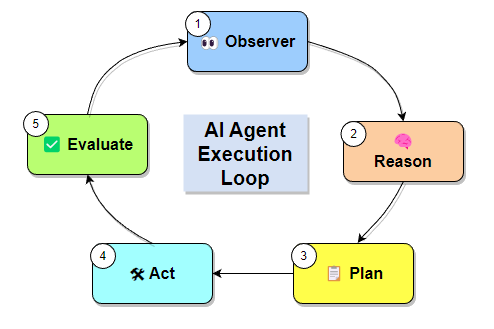
Unlike a traditional chatbot, an AI agent doesn't simply answer a question. It follows a workflow that allows it to complete a task in several stages. This process can be summarized in five phases: observe, understand, plan, act, and verify.
1. Observe
It all starts with information gathering. Depending on the task assigned, the agent may consult documents, analyze an email, search for information on the internet, or access a calendar. Their goal is to gather all the necessary information before making a decision.
2. Understanding
Once the information is gathered, the AI model analyzes the request and its context. It identifies the objective to be achieved as well as any constraints, such as a budget, a deadline or user preferences.
This step is comparable to when a human reads a file before starting to work.
3. Plan
The agent then develops an action plan. Instead of trying to do everything at once, he breaks the mission down into several logical steps.
For example, to organize a trip, he might decide to search for a flight, compare several hotels, check the weather, then create an itinerary before presenting the result.
4. Take action
The agent then takes action using the tools at their disposal. They can send an email, search for information, edit a document, complete a table, or communicate with other software via APIs .
It is this ability to act that differentiates an AI agent from a simple chatbot.
5. Check
Once the task is completed, the agent checks the result. If an error is detected or if a step has not been successful, they can correct their plan and try again.
This improvement loop allows it to be more autonomous while still allowing a human to validate important actions.
Key takeaway : an AI agent functions like an organized collaborator. It gathers information, thinks, prepares a plan, acts, and then checks its work before moving on to the next step.
The building blocks of an AI agent
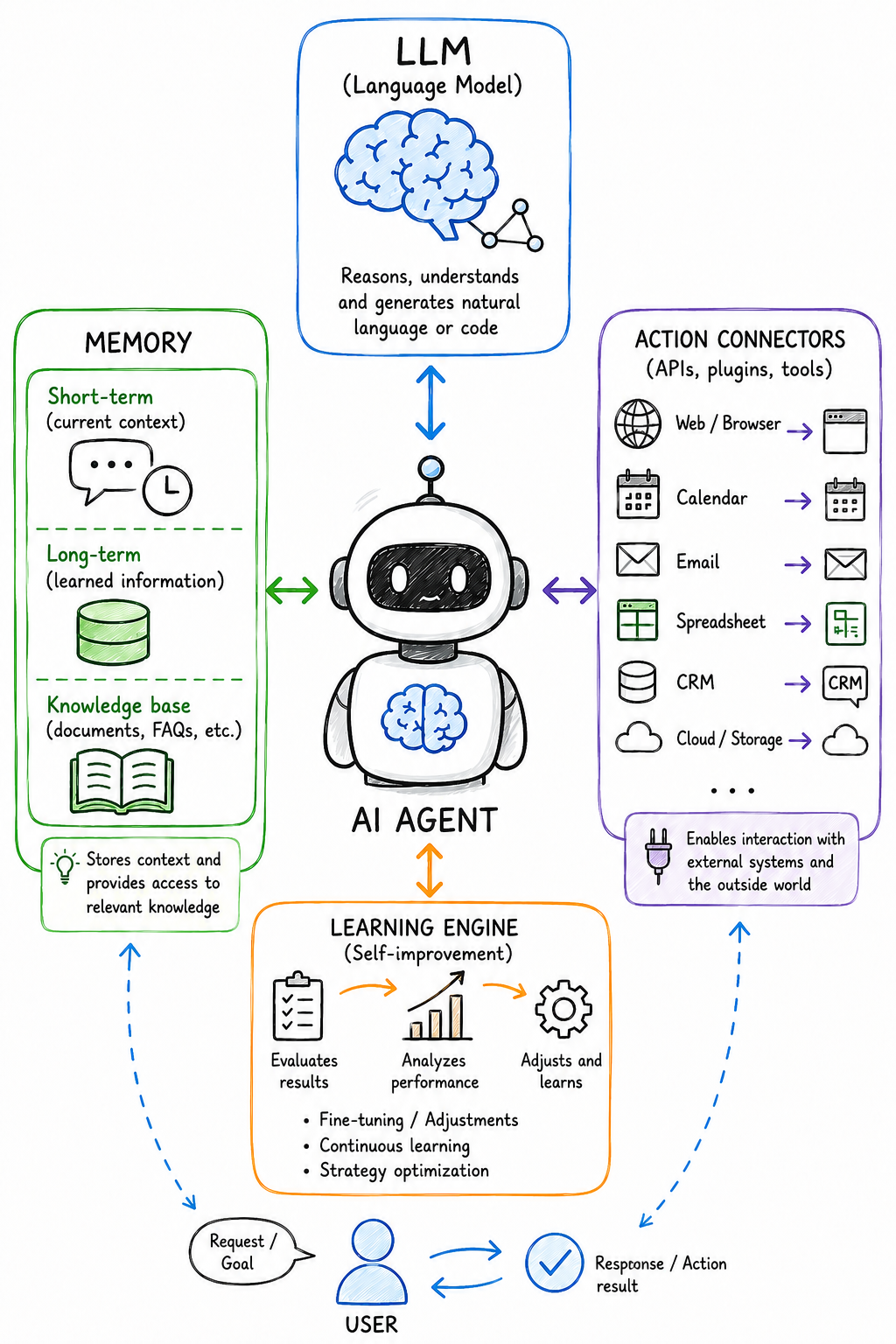
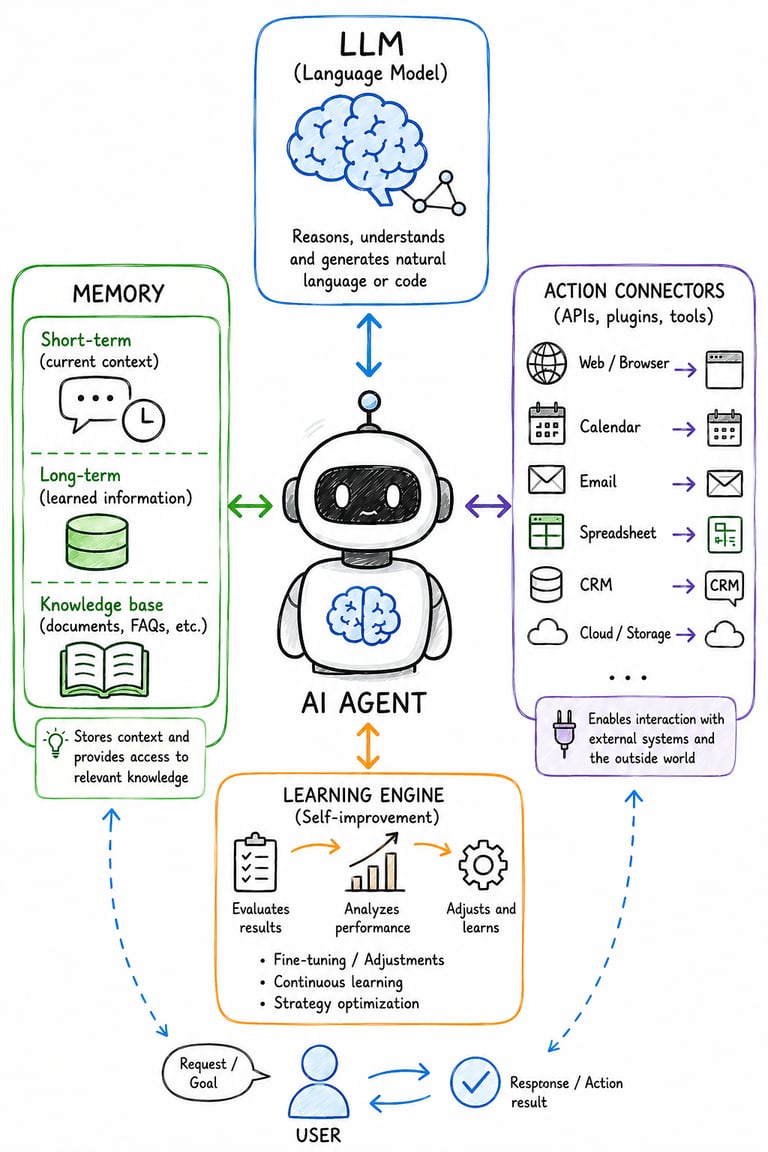
In concrete terms, an AI agent combines several key components:
The LLM (Language Model) : this is the agent's "brain." It can be GPT-4, Claude, Gemini, or any large, trained model. The LLM processes natural language and generates reasoning in human language or code.
Memory : Unlike a simple chatbot, the AI agent maintains an extensive context. It uses short-term memory (the current dialogue) and long-term memory (previously learned information), as well as an integrated knowledge base. This memory prevents the loss of essential information during a conversation (LLMs alone forget the beginning of a conversation beyond a certain token limit).
Action connectors : These are the interfaces to the outside world (APIs, plugins, workflows). They allow the agent to interact with other systems (office tools, websites, etc.) or even call upon other specialized AI models. For example, an agent can use a calendar API to schedule an appointment, or control a web browser to fill out a customer form.
The learning engine : after each series of actions, the agent analyzes its own results. This self-improvement loop allows it to adjust its performance based on usage. In practice, this translates into internal fine-tuning or updating its parameters based on past successes and failures.
These foundations determine its capabilities: the quality of the LLM and the richness of the connectors define the scope of possible tasks. For example, an agent with an integrated browser can retrieve information from the Internet, while a "black box" agent without web access would remain limited to internal data.
📚 Deepen your knowledge of AI agents
Discover a reference work to better understand the possibilities offered by these new assistants capable of analyzing information, using tools and automating certain tasks.
Concrete examples of AI agent use
AI agents are already finding their place in many sectors. Their common feature? Automating tasks that would normally require multiple human interventions.
In customer service , an AI agent can answer frequently asked questions, create a support ticket and direct the customer to the right solution.
In human resources , he can manage leave requests or answer employee questions.
Sales and marketing teams use them to research prospects, personalize emails, update a CRM, or launch marketing campaigns across multiple channels.
Content creators also save time thanks to AI agents, which can write articles, social media posts or video scripts while adapting to a company's editorial line.
Finally, AI agents can automate administrative tasks such as analyzing an Excel file, generating a report, organizing documents, or collecting information from the Internet.
In everyday life, they can also act as true personal assistants. For example, they are capable of organizing a trip by searching for a flight, booking a hotel, and then adding the different stages to your calendar.
💡 Key takeaway: AI agents are particularly effective at automating repetitive or time-consuming tasks, in order to free up more time for humans for missions that require creativity, judgment or decision-making.
The limitations of AI agents
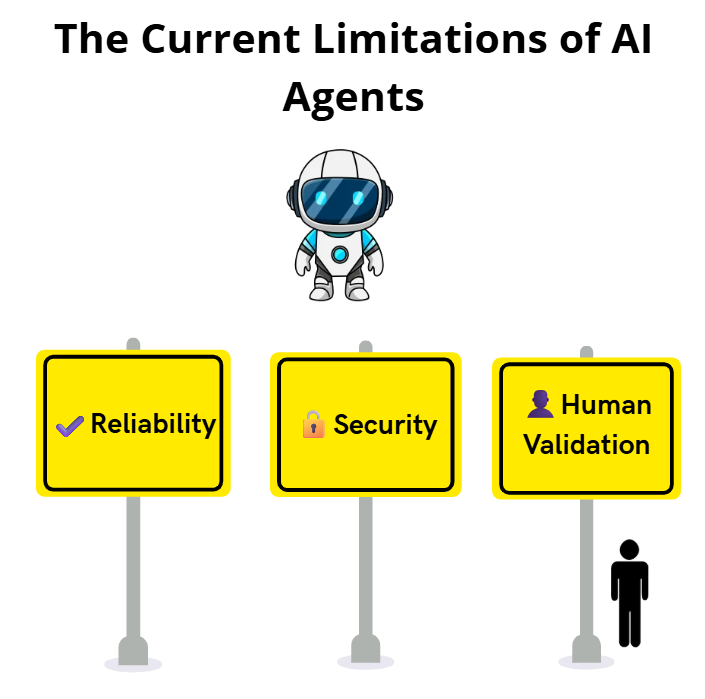
Even though they are capable of automating many tasks, AI agents are not infallible. They remain powerful tools, but still require human supervision in many situations.
The first limitation concerns their reliability . Faced with complex tasks, ambiguous instructions or highly interactive websites, an AI agent can make mistakes, forget a step or be blocked by protections such as CAPTCHAs.
Security is also a major concern. To send emails, access a calendar , or view documents, an employee needs numerous permissions. Companies therefore implement safeguards to limit the risks associated with data confidentiality and sensitive actions.
Finally, their deployment represents an investment . Integrating an AI agent into a company requires time, compatible tools, and adapted processes. In many cases, the return on investment still needs to be evaluated.
Today, AI agents are therefore better seen as intelligent assistants than as human replacements. They excel at automating repetitive tasks, but important decisions and the validation of results generally remain the responsibility of a human.
Conclusion
AI agents represent a new stage in the evolution of artificial intelligence: they no longer simply answer questions, they can now act . By combining large language models (LLMs) with external tools, these systems are capable of analyzing an objective, planning multiple steps and executing actions, and even coordinating different software programs.
This enthusiasm explains why 2025 and 2026 are often presented as the "years of AI agents." Companies see these technologies as a way to automate complex tasks, improve productivity, and create new ways of interacting with digital tools.
But we must remain realistic: current AI agents are still far from possessing general intelligence comparable to that of a human. They require supervision, safeguards, and regular checks to prevent errors or inappropriate decisions. Their true potential will depend on future advances in reasoning, reliability, and integration into professional environments.
Today, AI agents do not replace humans: rather, they become true digital teammates , capable of taking over repetitive tasks and assisting users in their daily work.
Want to go further ?
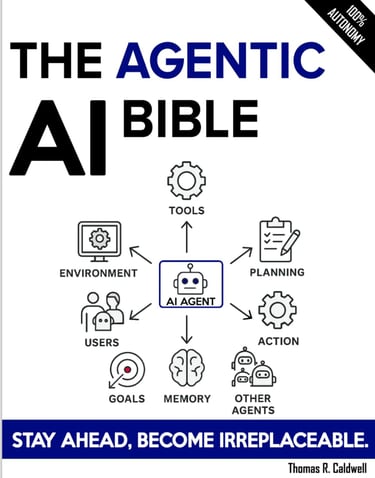
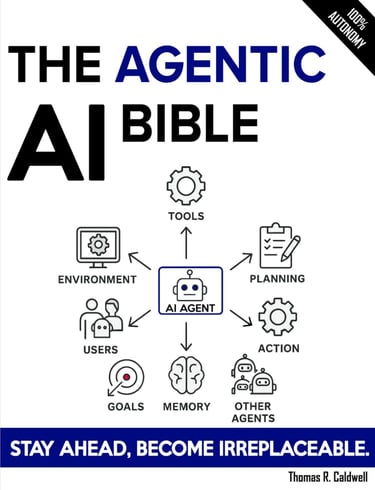
If this article has sparked your interest in AI agents and you'd like to explore the topic in greater depth, I recommend The Agentic AI Bible.
This book goes beyond simply using AI tools. It explores how modern AI agents are designed, from reasoning and planning to memory, tool integration, deployment, and real-world applications. It also covers key concepts such as multi-agent systems, evaluation, safety, and scalable architectures.
Whether you're an engineer, a software developer, or simply curious about the future of autonomous AI systems, it provides a comprehensive overview of the technologies and design principles behind today's most advanced AI agents.
If you're looking to understand how AI agents actually work and how to use them, this book is an excellent companion to this article.
🔎 Related articles :

Tech, simply.
Receive our new articles, tips and comparisons directly in your inbox.
©2026 The Tech BEHIND. All rights reserved
The Tech Behind participates in various affiliate programs. Some links on this site may generate a commission.