


How do noise-cancelling headphones cancel sound? (2026 Buying Guide)
How does the noise cancellation of your headphones work? Discover the secret of noise cancelling explained simply and our 2026 model buying guide.
ELECTRONICSEVERYDAY TECHNOLOGIES
Lucas GRANDIER
6/17/20266 min read


Imagine yourself on a long-haul flight, muffled by the continuous rumble of the engines, or trying to concentrate in a busy shared office. You put on your headphones, press a button, and suddenly, the hubbub fades away to give way to absolute silence.
Active Noise Cancellation (ANC) is like a magic trick. In reality, it is a feat of engineering initially designed to preserve the hearing of helicopter pilots, and which has become democratized to become indispensable to our daily lives.
How does your equipment manage to erase noise pollution without altering your music? Is it safe for your hearing system? And above all, which devices should you turn to in 2026? Dive into the heart of silence with clear explanations and our comparison of the best current models.
Phase 1: Mechanical insulation (passive reduction)
Phase 2: Mathematical neutralization (active reduction)
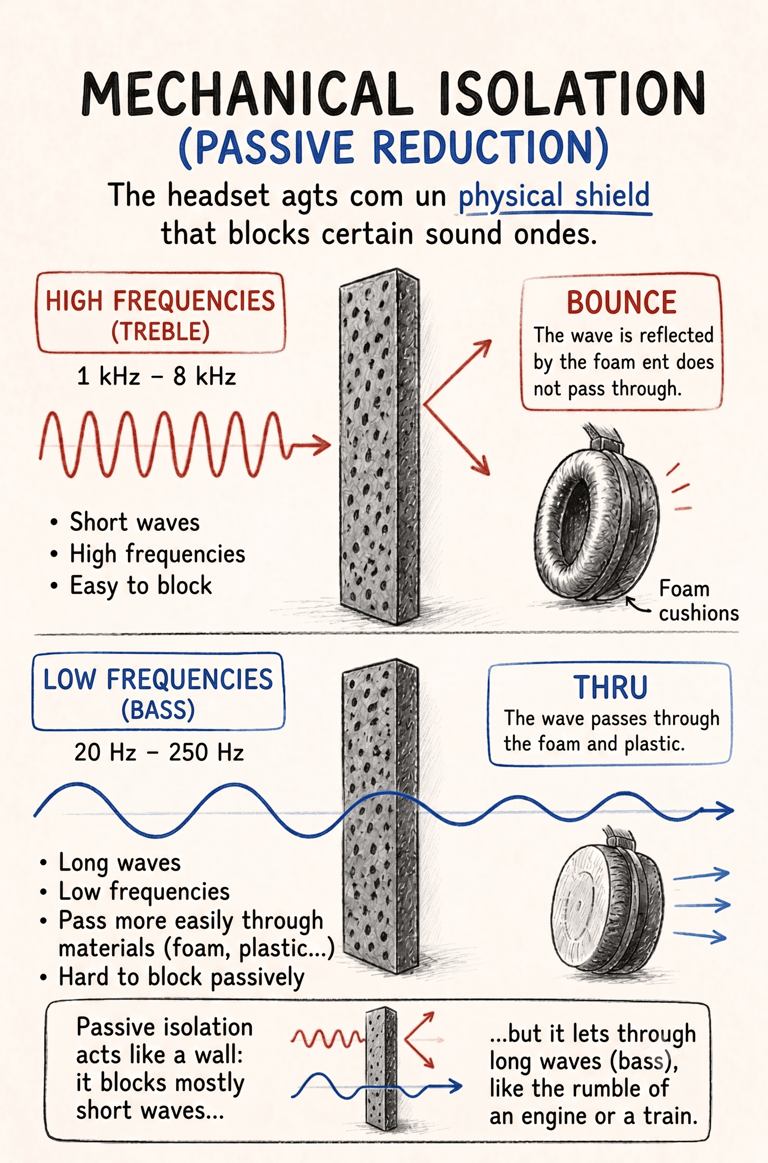
Long before algorithms do their job, the very size of your headset is your first line of defense. This is what specialists call sound insulation or passive noise reduction.
The concept is as old as it is intuitive: putting your hands on your ears naturally muffles the surrounding hubbub. Headphones (with their thick, encompassing ear cushions) and in-ear headphones (thanks to their silicone tips that seal the ear canal) work exactly like large earplugs:
What it easily stops: High-pitched, short sounds (high frequencies between 1 kHz and 8 kHz), such as the bursting of voices, the rattle of a keyboard, or the clinking of a glass.
What she lets pass: the heavy and continuous sounds. Low-pitched sounds (such as the purr of an airplane engine, train, or air conditioning) have low frequencies and long wavelengths, making it easier for them to pass through physical barriers, including the foam and plastic of headphones.
It is in the face of this limitation of physics that electronic technology becomes indispensable.
It is during this second stage that the helmet unfolds its true power. Unlike mechanical isolation, which simply tries to block sound, the ANC system aims to disintegrate it.
To popularize this method, visualize the sound as waves undulating on the water. If a hollowed wave (downwards) hits a wave of the same size but bulging (upwards), the two forces cancel each other out and the surface of the water becomes smooth again. We can also use the analogy of the door: if you push a door to one side and another person pushes it in front of it with a perfectly equal force, the door will remain stationary.
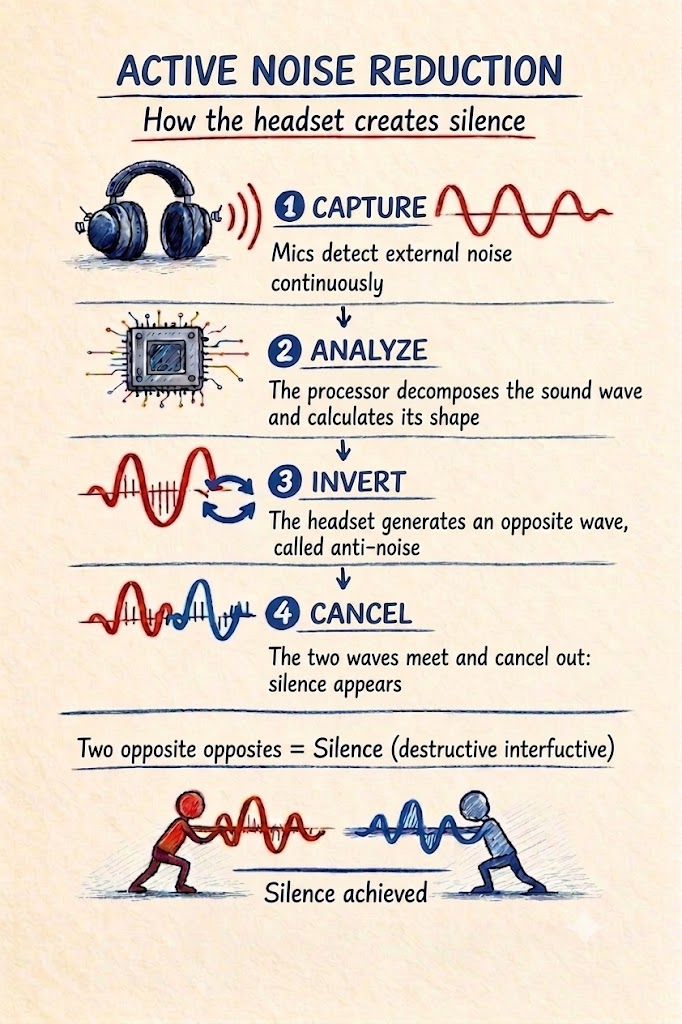
Here's the lightning-fast process your headset completes in microseconds:
Recording: Miniaturized microphones, placed on the surface of the device, continuously probe the sound environment.
Treatment: A very powerful processor dissects the exact fingerprint of this noise.
The reverse signal: Instantly, the headphones generate a "mirror" sound, a frequency strictly opposed to external noise.
The collision: The device plays this counter-noise in your ears along with your audio track. The external wave and the inverted wave collide and annihilate each other. The eardrum remains still, you perceive silence.
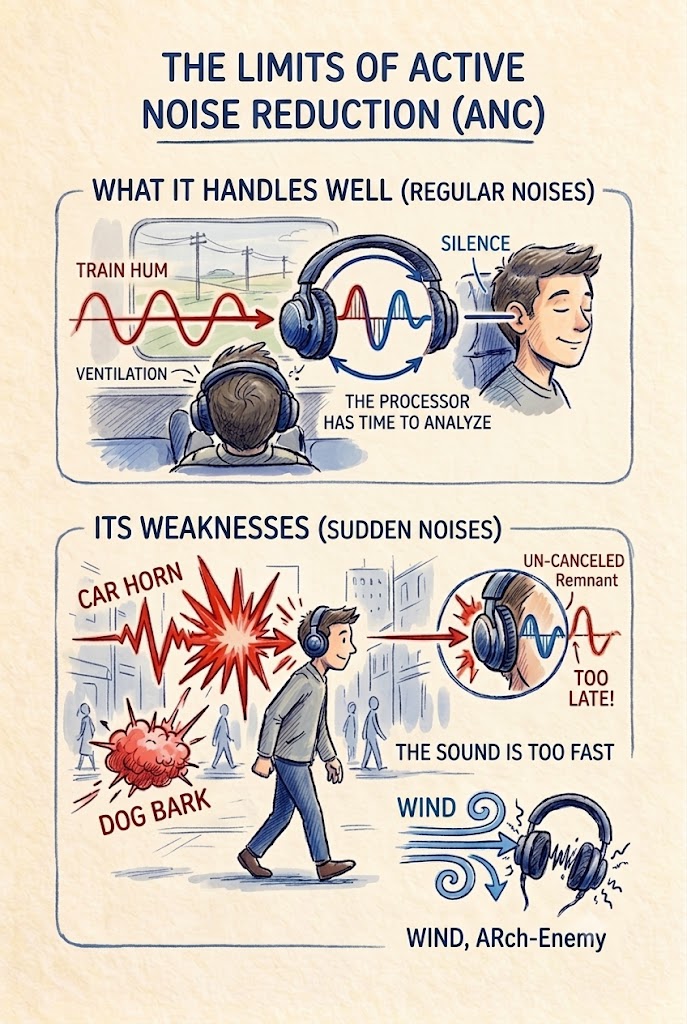
ANC's weak points: Impromptu noises and gusts
While fascinating, this technology has vulnerabilities. The ANC system excels in the face of nuisances Although fascinating, (ventilation, engines, road hum). The processor has plenty of time to decipher the frequency to neutralize it. This technology has vulnerabilities. The ANC system excels in the face of regular and predictable nuisances (ventilation, engines, road hum). The processor has plenty of time to decipher the frequency to neutralize it.
On the other hand, electronics struggle with sudden and irregular sounds (barking, horns, falling objects). The occurrence of these noises is so rapid that by the time the anti-noise is generated, the original sound has already hit your eardrum.
Moreover, the wind is the ANC's worst enemy. When gusts of wind hit the outdoor microphones directly, the processor goes into a panic and tries to cancel out these distortions, generating a parasitic blast. It is therefore recommended to turn off the active reduction when cycling or when it is very windy!
The Illusion of Auditory "Pressure": Should We Be Worried?
Many beginner users report an unsettling sensation when they first activate ANC: a feeling of "pressure" or emptiness, similar to what you get in a fast elevator or a plane taking off.
Rest assured, your helmet does not change the air pressure in any way! This is a psychosomatic reaction of your brain. In everyday life, a background of low frequencies constantly surrounds us. When the device radically suppresses this rumble, the human brain is disoriented. In nature, the sudden disappearance of low frequencies is always associated with a change in altitude. As a survival reflex, your brain creates this false feeling of pressure.
Far from damaging your eardrums, noise cancellation protects them considerably. By eliminating ambient noise, it deters you from turning up the volume of your music to dangerous levels to mask noise.
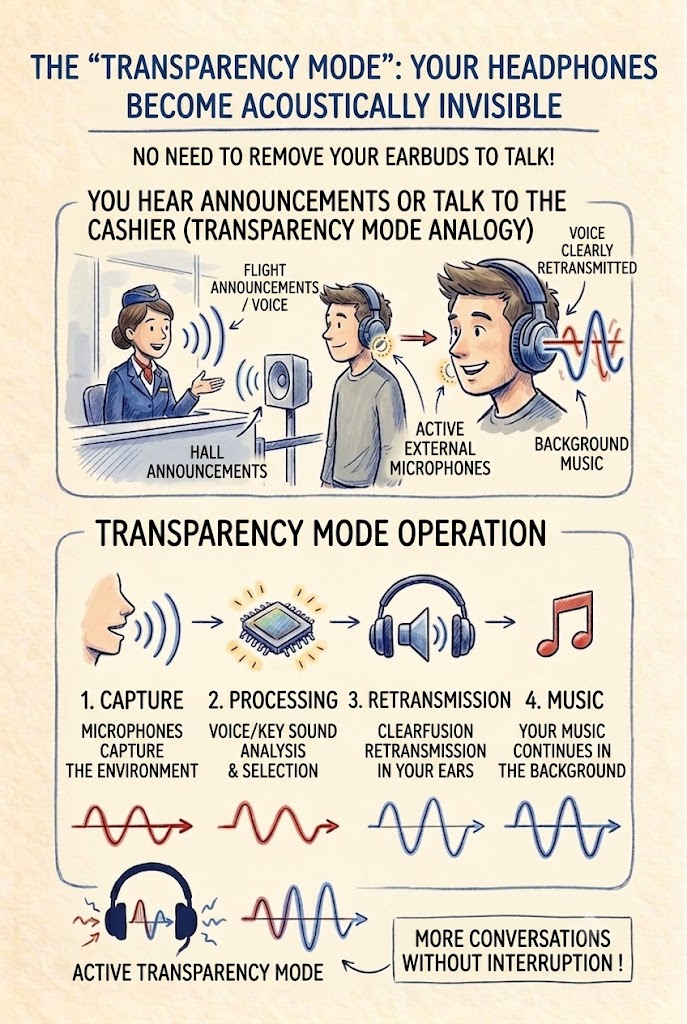
Transparency Mode: Reverse Noise Cancelling
Do you need to talk to the cashier or listen to the announcements of your flight?
No need to take off your headphones!
Almost all current models integrate a "Transparency Mode" (or environmental listening mode). Instead of creating an opposite signal to destroy sound, outdoor microphones pick up voices and the environment and transmit them clearly directly to your ears, while continuing to play your music in the background. It's as if your headphones become acoustically invisible.
Conclusion: An investment in your well-being
Active noise cancellation is far from just a marketing gimmick. By combining the physical barrier of materials (which filters out unpredictable and high-pitched noise) with the power of electronic computing (which erases constant rumblings), this equipment builds a veritable auditory sanctuary.
Whether it's relieving fatigue on a long journey, boosting your productivity in a shared environment or protecting your eardrums, silence on command is a technological innovation that you will find very difficult to do without!
What is the best noise-cancelling headphones in 2026?
Now that you're an expert in destructive interference, it's time to gear up. Here are the most powerful devices on the market currently available on Amazon, classified by use.
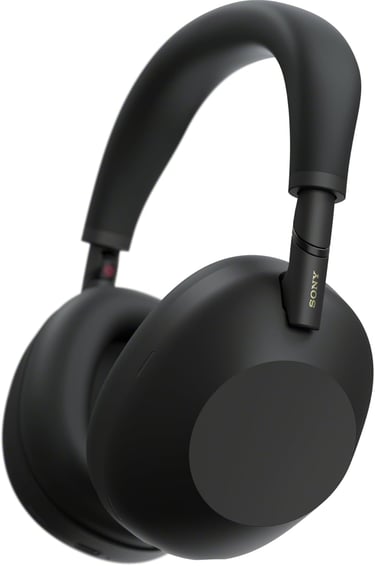
1. The undisputed leader: Sony WH-1000XM6
It is the ultimate travel companion. Sony has equipped its new iteration with 12 microphones dedicated to sound analysis, offering phenomenal isolation and a 30-hour battery life (with ANC on). Its major advantage compared to the previous generation? It has regained its hinges and can finally fold up to fit into any backpack.
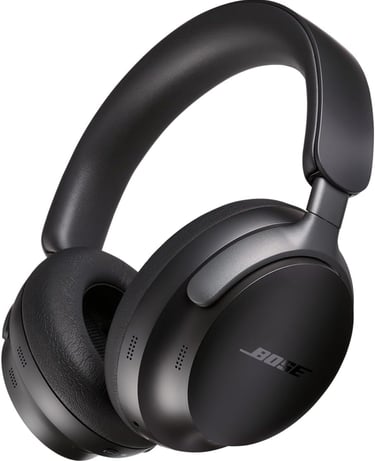
2. Comfort Excellence: Bose QuietComfort Ultra
If your helmet is going to stay on your head all day, turn to Bose. Known for its legendary lightness, it features a fearsome bubble of silence, complemented by a Spatial Audio function that feels like listening to a home theater system rather than headphones.
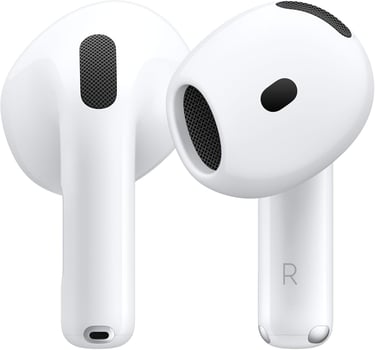
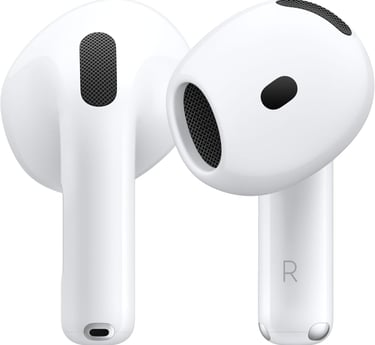
3. The "Earplugless" Revolution: Apple AirPods 4
Can't stand having silicone tips pushed into the ear canal? In 2026, Apple has managed to integrate a particularly powerful noise cancelling system into traditional "open" headphones that sit right at the entrance of the ear. The ideal compromise for pressure-free urban comfort.
4. The Smart Choice: Soundcore Space Q45
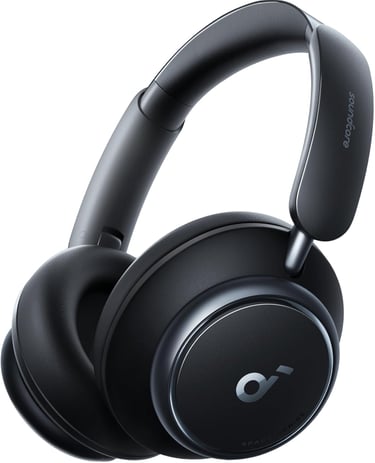
It is not always necessary to pay nearly €400 to isolate yourself from the world. Generally offered around a hundred euros, the Soundcore Space Q45 crushes the competition in its price range, while offering a colossal battery life of 50 hours. It is the perfect helmet for students and thrifty nomads.
🔎 Related articles :

Tech, simply.
Receive our new articles, tips and comparisons directly in your inbox.
©2026 The Tech BEHIND. All rights reserved
The Tech Behind participates in various affiliate programs. Some links on this site may generate a commission.